
















FICHA DEL JUEGO
Precio: 
89,25 € - 20% = 71,45 €
89,25 € - 20% = 71,45 €
 Comprando este juego podrás ganar OcaPoints.
 Edición: 

Reglas:
Reglas:






En la Tienda MasQueOca existen varios estados en los que puede estar un juego:
| En stock: el juego está actualmente en nuestros almacenes y disponible para su envío. (*) | Últimas unidades: tenemos en stock unas pocas unidades del juego bien por tratarse de una oferta especial en precio o porque el editor ya ha agotado las unidades de las que disponía y de momento no tiene previsto hacer una reimpresión. (**) |
|---|---|
| Precompra: el juego tiene una fecha aproximada de recepción, está indicada en la ficha del juego, esta fecha no es fija ni vinculante y pudiera adelantarse o atrasarse por causas ajenas a nuestra voluntad. Se procederá al envío del pedido en cuanto lo recibamos de acuerdo a las reglas de Pedidos en Precompra. ¡Atención, las precompras no son reembolsables y se consideran como productos encargados específicamente por el cliente!
P500: el juego no ha sido todavía editado, pero se puede reservar sin compromiso para poder tenerlo asegurado cuando se edite. No es posible adquirirlo todavía pero sí reservarlo. Cuando el juego alcance el número de reservas necesarias o por decisión editorial pasará al estado Precompra. |
Disponible Bajo Demanda: el juego no está en este momento en nuestros almacenes, pero en principio estamos esperando su reposición por parte del proveedor. El tiempo de reposición aproximado para un juego nacional es de 1 semana y para un juego de importación suele ser de 3/4 semanas, pudiera ser que recibamos la reposición antes o que en el caso de la importación se demore por causas ajenas a nuestra voluntad. (***) ¡Atención, las compras bajo demanda de juegos de importación no son reembolsables! Pero si un juego no estuviera disponible en el editor, en el momento en que tuviésemos constancia te avisaríamos para que pueda solicitar su cambio o anulación. |
| Pendiente de Primera Edición: el juego no ha sido todavía editado, pero se puede reservar sin compromiso para poder tenerlo asegurado cuando se edite. No es posible adquirirlo todavía pero sí reservarlo. Cuando tengamos una fecha aproximada de recepción el juego pasará al estado Precompra. | Agotado / Pendiente de Reedición: el juego se encuentra agotado por el fabricante y está preparando una reedición. El juego se puede reservar sin compromiso para poder recibir la información del mismo en el momento que se reedite. No es posible adquirirlo todavía pero sí reservarlo. Cuando tengamos una fecha de recepción el juego pasará a Precompra. |
| Oportunidades: el juego está en stock en unidades limitadas. Las Oportunidades son juegos que o bien han sufrido algún desperfecto en la caja o bien han sido abiertos por alguna razón (comprobaciones de control de calidad, etc), pero que su contenido está perfecto. Es decir, son juegos que contienen todo lo necesario para poder jugarlo. No se remitirán fotos específicas del estado de las cajas, a todos los efectos se debe considerar como si se comprase el juego sin caja y sin inserto, aunque la gran mayoría de las veces son desperfectos sin importancia. Estos juegos, dada la naturaleza de los mismos, no admiten cambios ni devoluciones. | Chollos: el juego está en stock en unidades limitadas. Los chollos son juegos nuevos a estrenar que ofrecemos a precios especiales. La oferta está limitada en el tiempo y a las unidades que se pongan en oferta, una vez se retiren de la sección de Chollos su precio volverá a ser el estándar. Estos juegos, dada la naturaleza de los mismos, no admiten cambios ni devoluciones. |
| Descatalogado: el juego ha sido descatalogado por el fabricante por lo que en principio no se espera ninguna reimpresión. No obstante, en contadas ocasiones, un fabricante decide volver a imprimir un juego. No es posible adquirir el juego, pero sí reservarlo. Si tenemos constancia de una reimpresión y una fecha aproximada de recepción, pasará a Precompra. | |
| Reserva Vinculante: la Reserva Vinculante permite reservar anticipadamente un juego mediante el pago de un importe inicial, que será descontado del precio final del producto reservado cuando se habilite su adquisición definitiva. Esta reserva da derecho al cliente a acceder de forma anticipada a la precompra del juego objeto de la reserva, en condiciones más ventajosas de precio, así como a los juegos, expansiones o add-ons relacionados con dicho producto, cuando estén disponibles. El importe abonado está vinculado exclusivamente al juego reservado. En caso de que el cliente no complete posteriormente la adquisición del producto, dicho importe no será reembolsable ni podrá aplicarse a otros juegos, artículos o pedidos. Por su naturaleza especial, la Reserva Vinculante no permite añadir al pedido otros productos ajenos a la misma, solo admite una unidad por pedido, no permite el uso de cupones descuento y no genera OcaPoints. La realización de la Reserva Vinculante supone la aceptación expresa de estas condiciones particulares. | |
(**) Salvo que en el mismo momento de realizar la compra se realice en paralelo otra compra que agote las unidades, dada esta situación el juego pasará a disponible bajo demanda a precio normal o a descatalogado y se lo comunicaríamos por correo electrónico.
(***) Salvo que al solicitar la reposición al editor nos comunique que el juego esté descatalogado o pendiente de reimpresión. Lo que se comunicará por correo electrónico en cuanto tengamos conocimiento.
|
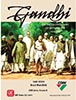
Gandhi: The Decolonization of British India 1917–1947 (COIN) "You don´t think we´re just going to walk out of India?” “Yes. In the end, you will walk out. Because 100,000 Englishmen simply cannot control 350,000,000 Indians if those Indians refuse to cooperate. And that is what we intend to achieve: peaceful, nonviolent, non-cooperation—until you, yourselves, see the wisdom of leaving, Your Excellency.” — Mohandas Gandhi to Viceroy Lord Chelmsford (as quoted in Richard Attenborough’s 1982 film) In 1917, a minor figure in Indian politics thrust himself onto the world stage and soon became the inspirational leader of the most successful nonviolent movement in world history. Mohandas Gandhi waged a decades-long campaign of civil resistance against the mightiest empire the world had known and won independence for the people of India. Their struggle would become the model for people across the globe, from the Civil Rights Movement in the United States, to Solidarity in Eastern Europe and the People Power Movement in the Philippines. But the story of India in the waning years of the Empire does not belong to Gandhi alone.
India had always been defined by its diversity, home to a wide array of cultures, languages, religions, ethnicities, and polities. Gandhi’s movement was one of many that evolved in those decades. The image of Gandhi in the popular imagination—Gandhi the saintly figure, the father of free India—oversimplifies the past and overlooks the important contributions of others. These ever present fault lines threatened to split India apart. The Muslim League increasingly agitated for Muslim autonomy and was willing to compromise with the British to achieve it. Across India, revolutionary Hindu groups formed and challenged Gandhi´s nonviolent approach by waging armed struggle against the British. Periodic eruptions of terror and assassination were met by mass arrests and British reprisals. These may have restored order for a time, but such repression only fueled the next uprising. British power in India was always a balancing act, an act that became increasingly difficult to maintain as resistance across India grew. In the end, was it Gandhi’s nonviolent movement that ultimately toppled the Raj? Or was it the accumulation of years of unrest of all types that ultimately led to the decolonization of the largest dominion of Imperial Britain? Gandhi: The Decolonization of British India, 1917–1947 is Volume IX in GMT’s acclaimed COIN Series. Exploring one of the world’s most prominent experiments with nonviolent resistance, Gandhi takes us to the subcontinent of India, the jewel in the crown of the British Empire, for a detailed look at the final decades of the British Raj. 1 to 4 players compete to determine the future of India; will the transition to home rule be a peaceful one, will India be split apart by partition or civil war, or will it remain firmly in the grip of empire? Gandhi offers a fresh perspective on the history of insurgency with the addition of a new type of faction to the COIN Series, the Nonviolent (NV) faction, while retaining the multi-faction, asymmetrical, card-assisted system of earlier titles in the COIN Series. COIN veterans will be able to jump right in. Other features include:
Gandhi as the game’s sole leader piece. Nonviolent operations and special activities. Nonviolent activists that are always active, but generally immune from Raj actions until engaged in protests (or caught up in post-terror reprisals). Protests that erode support but leave activists vulnerable to arrest by Raj forces. A Hindu-Muslim Unity track that measures tensions between these two communities, affecting resources, operations, and victory. A British Rule track that reflects shifts in colonial policy in response to events on the map, from resolve to restraint, affecting the cost of several actions. British Viceroys who come and go with each passing campaign and have their own unique effects on each faction. An out-of-play jail space that holds nonviolent forces arrested during martial law. Pieces can be kept in jail over several campaigns, but at a cost to the Raj. Independent Princely States that are never controlled by any faction, yet offer a haven for violent and nonviolent insurgents alike. Short and medium-length scenarios that allow for the study of different periods of the struggle against British rule in India. Support for solitaire, 2-player, 3-player, and 4-player games. Each of the four factions in Gandhi bring their own capabilities and challenges: As Gandhi and the Indian National Congress, you have a host of nonviolent tools to break the British grip on India, but how will you achieve your goals while keeping the vast subcontinent united? You need to convince the people of India to shed their reliance on the British and reclaim their independence as a free nation. You need the support of the Muslim League but how will you keep the Muslims from splintering to form their own state? While you have rejected violence as the means to achieve independence, the Revolutionaries have not. How will you restrain their activities while avoiding being swept into British jails during martial law raids? As the Muslim League, you have also adopted nonviolence as your tool for achieving independence, but seek a different goal than Gandhi’s Indian National Congress. Concerned for the fate of Muslims in a future India dominated by Hindus, you fight for the establishment of a free Muslim India—the promised nation of Pakistan. But how will you foster support for a separate Pakistan without allowing India to slip into a bloody civil war between Muslims and Hindus? As the Revolutionaries, you seek the immediate end to British Rule in India. You are willing to use the traditional tools of violent rebellion—terror and assassination—to achieve your ends. India is vast and its cities and provinces offer many hiding spots from which to plot your next strike. But each move risks violent British reprisals and the ire of the nonviolent factions. How do you keep the British off balance while not playing into the hands of Congress or the Muslim League? As the British Raj, you face the difficult task of governing the large and populous colony of India. Can you maintain order and support for the colonial government in the face of determined resistance? You have the resources of a great imperial power, but the eyes of the world are on you; every arrest risks interference from London. How can you maintain both control over the colony and the continued support of its people? In Gandhi, players will face a range of difficult and interesting strategic choices. Following in the innovative footsteps of previous COIN titles, Gandhi weaves together historical, political, and cultural threads and offers an opportunity to study nonviolent and violent resistance in one of the most significant colonial possessions from the age of European imperialism. Civil disobedience and non-cooperation, protests and terror, imperialism and constructive programme, growing unrest, negotiation, agitation, assassination, persuasion, boycotts, martial law, and many other options await. “Gandhi made it impossible for us to go on ruling India, but at the same time he made it possible for us to abdicate without rancor and without dishonour.” — British Historian Arnold Toynbee
|